Ginger, Turmeric, and Galangal: Building Cozy at Home
By Sidonie Maroon, Culinary Educator for The Food Co-op
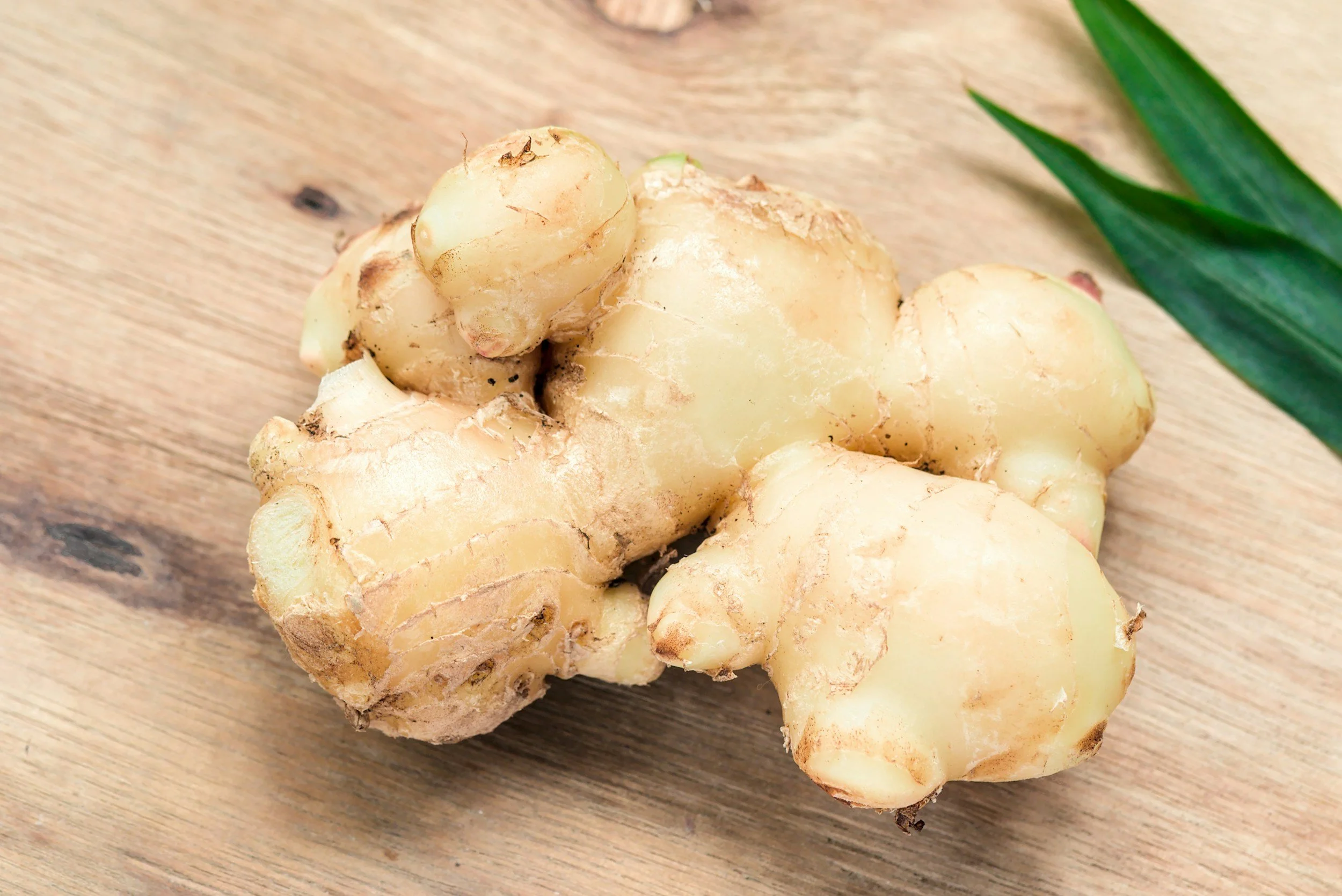
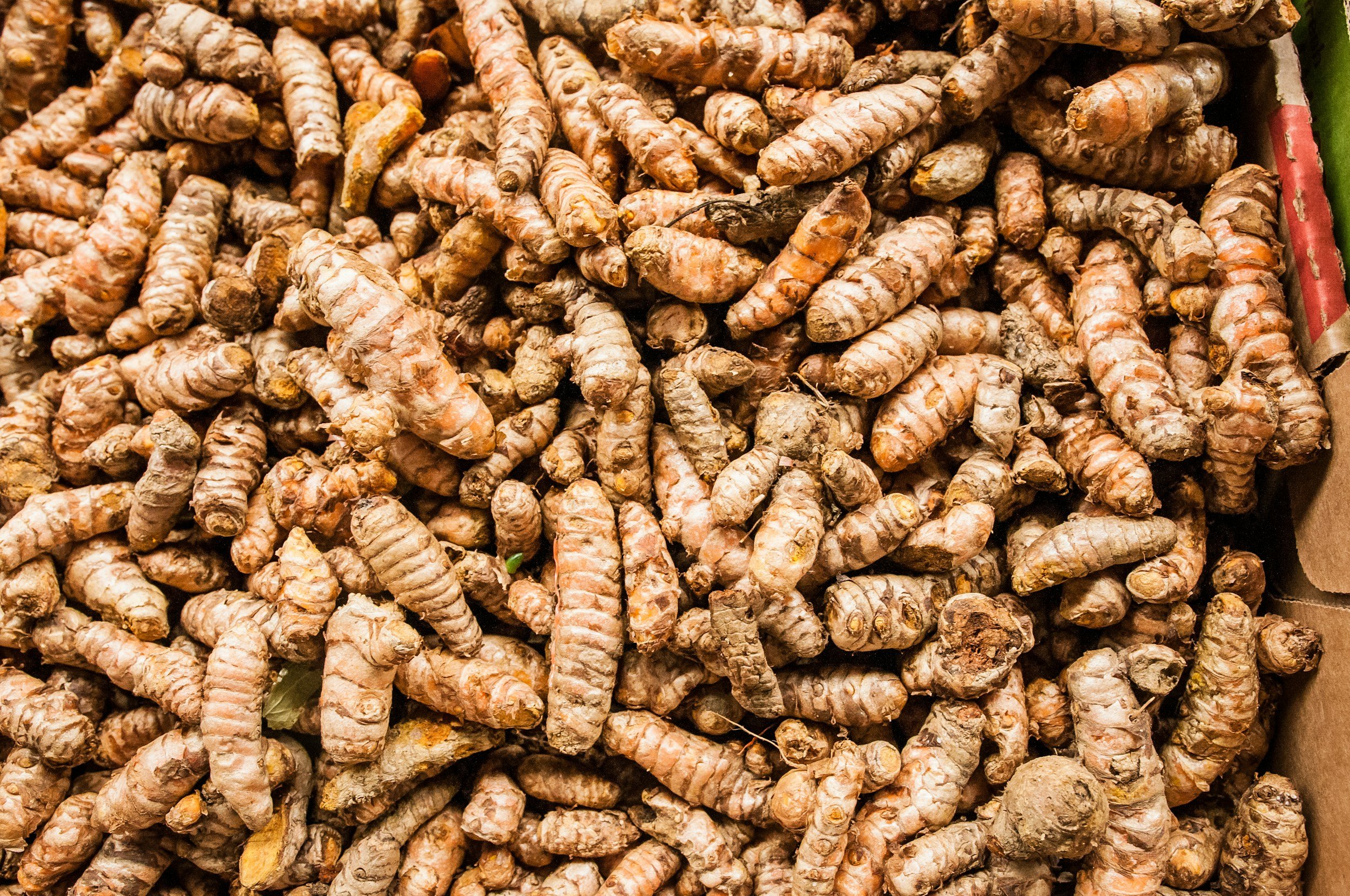
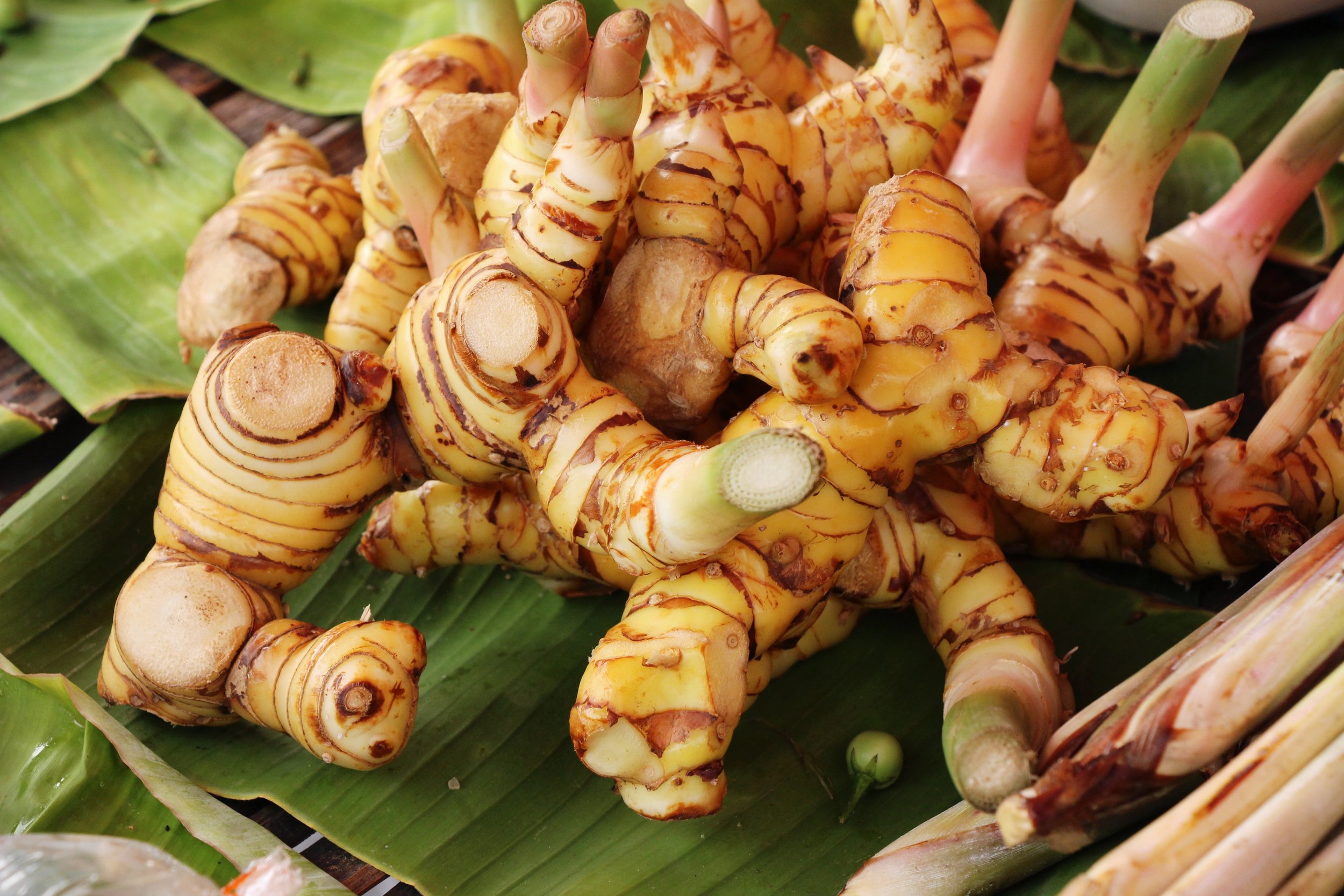
Start with the fresh roots. Ginger, turmeric, and galangal are easy to find and keep well in the fridge. Fresh brings out more aroma, a rounder flavor, and warmth in the pot. Dried powders are handy, but they land differently. Ginger powder is hotter and sharper. Dried turmeric is earthier and less bright. Dried galangal loses some of its pine‑citrus lift. Use fresh when you want fragrance and body. Use dried when you want speed and a steady baseline. Both work—choose based on the dish of the day.
Origins & Warmth
In South Asia, turmeric colored food and fabric, marked ritual, and flavored meals. Ancient texts praised it; traders carried it across seas; cooks kept it close for its earthy taste and bright hue. In our climate, turmeric’s steady warmth is welcome when the damp settles in.
Galangal’s Clear Lift
Southeast Asian cooks use it for its clear, pine‑citrus flavor. Medieval Europe knew it too; it showed up in old herbals and sauces. Where ginger is familiar and round, galangal is bright. Use them together for balance.
Ginger, Steady Companion
Ginger needs little introduction. It’s in cookies and teas, yet it belongs in soups and stews just as much. Across centuries and continents, ginger has been a steady kitchen companion—warming, versatile, and easy to handle. Using fresh ginger will change your baking.
How They Fit
Think of them as a family: ginger for body and heat, turmeric for depth and color, galangal for clarity. You don’t need to cook Southeast Asian dishes to use them. They work in everyday pots and mugs and will make your home feel cozy on these gray days.
Ginger–Garlic–Turmeric Vinegar Paste
Equal parts fresh ginger, garlic, and turmeric, chopped and pulsed to a paste. Pack into a small jar and cover it with apple cider vinegar. Store in the fridge. Use spoonfuls to start soups, stews, braises, and beans; whisk into dressings and marinades.
Roasted Roots with Ginger, Turmeric, Galangal + Coconut Gravy
Heat oven to 425°F. On a parchment‑lined sheet, toss 2 pounds mixed roots (potatoes, sweet potatoes, onions) with 2 tablespoons of oil and ½ teaspoon salt. Make a flavor paste: 2 tablespoons grated fresh ginger, 1 tablespoon grated fresh turmeric, 1 teaspoon finely grated fresh galangal. Rub the paste onto the vegetables. Roast for about 45 minutes, turning once. When nearly done, spoon the thick cream from a can of coconut milk over the pan. Stir and roast for 10–15 minutes more until it reduces and coats the roots. Serve hot with greens like kale or collards.
Hot Hibiscus Ginger Punch
Skip the galangal—the ginger carries it. Instant Pot: add 2 quarts water, ¼ cup chopped fresh ginger, and ½ cup dried hibiscus. Soup/broth cycle 30 minutes; natural release. Strain, jar, refrigerate; warm a mug with sweetener to taste. Stovetop: simmer covered on low for 25–30 minutes, then strain. Steam curls up tart and rosy; the first sip is bright and steadying.
Galangal Broth Starter
Slice fresh galangal thin. Simmer a handful with a knob of ginger, a bay leaf, and a pinch of salt in 2 quarts of water for 20 minutes. Strain. Use this clear broth as a base for vegetables, noodles, or rice. The aroma is clean and woodsy; it wakes the senses on damp days.
As the Chill Arrives
Ginger, turmeric, and galangal help build “cozy land” at home. Keep them within reach. Warm your hands around a mug. These small moves will brighten your season and keep the kitchen warm.
Serundeng (Toasted Coconut + Spice Savory Topping)
Makes 2 cups
Sprinkle over rice, noodle bowls, and curries for crunch and aroma.
Use as a finishing touch on Padang-style eggs or satay.
Fold into warm vegetables (green beans, shredded cabbage, or roasted squash).
Top soups right before serving to keep the coconut toasty.
2 cups grated dried coconut
4 tablespoons chopped cashews
2 tablespoons coconut oil
Flavor Paste
6 tablespoons minced onions
2 tablespoons minced garlic
2 teaspoons minced galangal root
2 teaspoons minced ginger root
2 teaspoons whole coriander
2 teaspoons whole cumin
1 teaspoon sea salt
2 teaspoons sugar (or coconut sugar)
2 tablespoons tamarind paste
Zest of 1 lemon
2 bay leaves
2 tablespoons finely minced lemongrass
Toast the cumin and coriander; grind with the sugar and salt.
In a small processor, grind garlic, galangal, ginger, lemon zest, and lemongrass with 2 tablespoons of water to a paste.
Heat a pan over medium with coconut oil; fry cashews until lightly browned. Remove and set aside.
Sauté the onions in the same pan. Add the wet paste, the ground spices, and bay leaves; cook until lightly browned and fragrant.
Stir in tamarind paste with 2 tablespoons of water.
Add coconut and cashews; toss until evenly coated. Spread on parchment to cool.
Store in a jar in the fridge.
Spicy Padang-Style Eggs
Makes 12
Sauté Base
1 tablespoon coconut oil
1 large onion, medium dice
1 cup thick coconut milk
½ teaspoon sea salt
Flavor Paste
1-inch piece fresh galangal, chopped
½-inch piece fresh ginger, chopped
½-inch piece fresh turmeric, chopped
3 cloves garlic, minced
1 teaspoon hot chili (e.g., pickled jalapeño), or to taste
2 tablespoons water
Eggs & Toppings
12 eggs
Grated zest of 1 lime
Juice of 1 lime
Fine chiffonade of fresh mint and lemon balm
Serundeng
Kecap manis
Preheat the oven to 350°F. Lightly oil a 12-cup muffin tin.
Process all flavor paste ingredients to a smooth paste.
Sauté the onions in coconut oil over medium heat until sweet. Lower heat; add flavor paste and cook until fragrant.
Add coconut milk and salt; simmer to reduce and thicken.
Divide the sauté base among muffin cups. Crack an egg into each; sprinkle with a pinch of salt.
Bake for 15–17 minutes until whites are set and yolks are slightly runny.
Serve with jasmine rice, kecap manis, and serundeng. Top eggs with lime zest, a squeeze of lime, and herbs.
Tofu–Potato Curry
Serves 4
Base
Coconut oil for frying
1 package firm tofu
2 medium potatoes, peeled and cubed
1 stalk lemongrass, crushed
2 bay leaves
2 lime leaves
1 can thick coconut milk
1½ cups vegetable stock
2 cups seasonal vegetables, bite-size
Spice Paste
1 large onion, chopped
3 cloves garlic
1-inch ginger
1-inch galangal
1 piece fresh turmeric
Fresh chili to taste
4 tablespoons coconut sugar
1 tablespoon tamarind paste
2 teaspoons coriander seeds
Salt and pepper, to taste
To Finish
Lime and fresh herbs for serving
Heat enough oil to deep-fry. Fry tofu until golden; drain. Repeat until all the tofu is done.
Pour off excess oil, leaving about 3 tablespoons. Add onion; cook until sweet.
Grind the spice paste ingredients. Add to pan with lemongrass, bay leaves, and lime leaves; stir-fry until fragrant.
Add potatoes and tofu; toss well. Add coconut milk and stock; simmer.
Cook until the potatoes are tender and the flavors meld. Add seasonal vegetables; cook until crisp-tender.
Adjust seasoning. Serve with steamed rice; finish with lime and herbs.
Ground Chicken Satay

Makes ~30 skewers
Flavor Paste
1 tablespoon coriander seeds, toasted and ground
1 tablespoon fennel seeds, toasted and ground
1 stalk lemongrass, white part only, minced
5 cloves garlic, minced
1 tablespoon galangal, peeled and minced
2 tablespoons ginger, peeled and minced
1 tablespoon turmeric, peeled and minced
4 tablespoons palm sugar
2 tablespoons coconut oil
3 teaspoons sea salt
3 tablespoons flax meal (binder)
Satay
3 pounds ground chicken thighs
30 bamboo skewers, soaked 30 minutes
Process the flavor paste until smooth. Mix into ground chicken. Fry a test patty; adjust salt/heat.
Shape golf-ball portions along skewers.
Roast at 450°F for about 10 minutes, until the internal temp reaches 165°F. Serve with sambal and rice.